Triathlon · Olympic distance
Olympic distance training, the recovery-led way
A 1500m swim, a 40km bike, a 10k run. Double the sprint, and the point where your aerobic engine starts deciding the result. This is how we build it without burning your week.
What Olympic distance is
Olympic distance, also called standard distance, is a 1500 metre swim, a 40 kilometre bike and a 10 kilometre run. Most age-group athletes finish between about 2 hours 20 and 3 hours 30. It is the distance raced at the Games, and for club athletes it is the sweet spot: long enough that endurance decides it, short enough to train for properly on a working week.
Training for a different distance? See Sprint, 70.3 or Ironman.
Racing the sprint plan
The classic error at this distance is carrying a sprint mentality into a race twice as long: every session pushed, intensity treated as the only currency, easy days skipped because they do not feel like training. Over 750 metres of swimming you can get away with it. Over an Olympic race the missing base gets found, usually somewhere on the second half of the run.
The false belief is that harder sessions build a bigger engine. They do not. The engine is aerobic, and the aerobic system grows under long, controlled, mostly easy load, repeated for weeks, absorbed with real recovery. Skip that and you have a sharp edge on a small blade.
"The engine is built in the sessions that feel too easy. The race just reveals it."
The recovery-led engine build
The recovery-led plan defends your easy volume as fiercely as your hard sessions. The majority of your week stays conversational, building the base that carries 40km of riding and a 10k off the bike. The quality sessions, threshold work and race-pace practice, are placed on the days your readiness says you can absorb them.
This matters double when training shares a week with a job and a family. Five to seven good hours, recovered from, beat ten scraped hours that leave you flat. Minimum effective dose is not a compromise at this distance. It is the strategy.
The sessions that matter
Swim
CSS-paced sets and open-water practice. 1500m is long enough that pacing and sighting cost real time. See the swim.
Long ride
The cornerstone. Steady, structured riding beyond race distance makes 40km feel like the middle of your range, not the edge. See the bike.
Run
Easy volume plus one weekly tempo or threshold session. The 10k is run on the base, raced on the tempo. See the run.
Brick
Regular bike-to-run work at race effort, so the first kilometres off the bike are familiar, not frightening.
The 12-week shape
Five to seven hours a week builds a genuine Olympic performance. The live block runs 12 weeks anchored to your race: waves of three build weeks and one recovery week, base first, then race-specific work, then a taper that arrives with you fresh. Outside the window you hold a simple base rhythm.
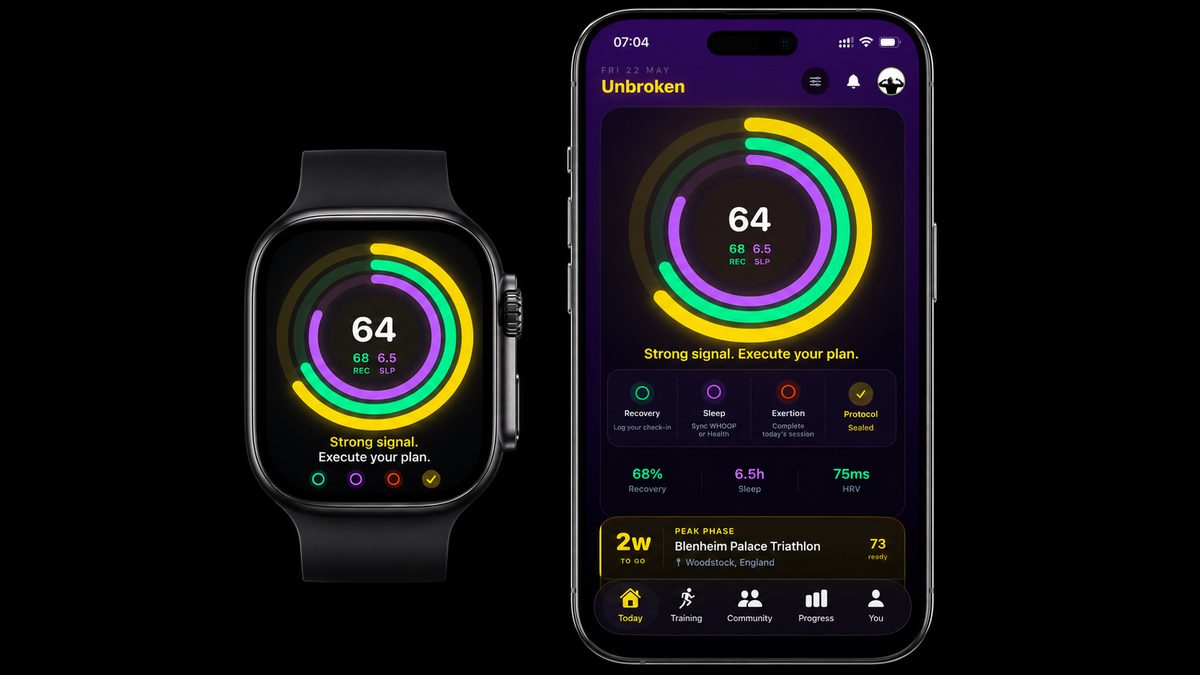
The Unbroken Protocol app anchors the block to your race date, adapts each week to your readiness, and tells you every morning whether today is an engine day or a recovery day, so the plan survives contact with real life.
Want a number to chase first? Predict your finish from your current CSS, FTP and run pace, then train to beat it.
Race day, briefly
Swim controlled and find feet to draft. Ride the first ten minutes easier than feels right, then settle into a strong, even effort that leaves the run alive. Start fuelling on the bike: carbohydrate early and regularly, practised in training first. Run the first two kilometres conservatively and negative-split what remains. Even pacing wins this distance far more often than bravery does.
Train it with us
Unbroken Triathlon Club trains out of NW10, London: Tuesday morning rides, Saturday bricks, coached strength midweek, all built on the same recovery-led system. Apply through Unbroken and Abraham reviews every enquiry personally. Prefer to talk it through? Call 07414 807997.
Olympic distance training, answered
Train it inside the whole system
Swim, bike, run, strength, recovery and the mind, coached as one and anchored to your race.
Build the engine, keep the week
Train Olympic distance the recovery-led way: a bigger base, a fresher body, and a life that still works.