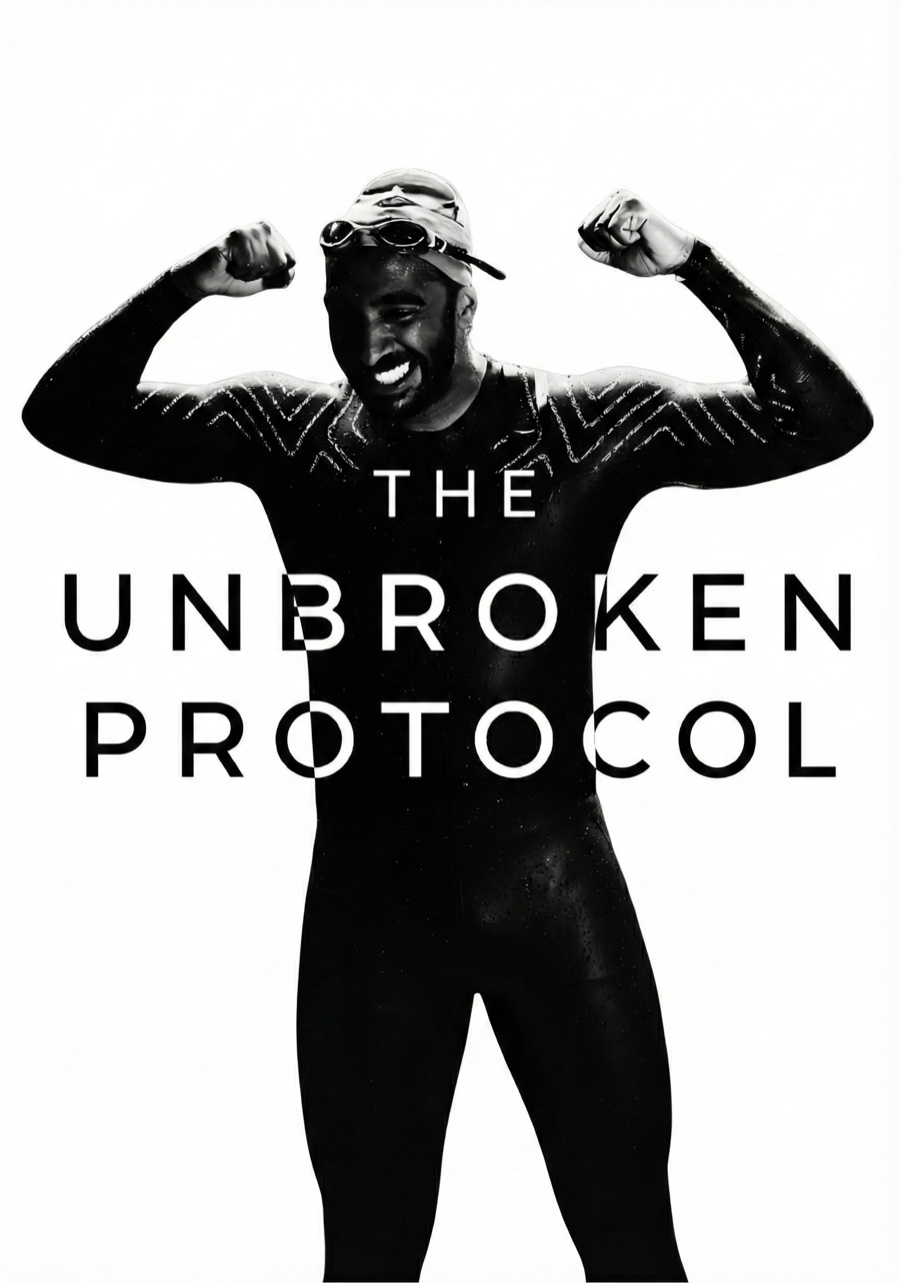
A man came to me last winter who could run a 38 minute 10k and could not swim 400 metres without stopping. He was fit. Genuinely, measurably fit. In the water he looked like someone being slowly dragged under by something you could not see.
He told me his legs sank. He was right. Then he told me his plan, which was to kick harder, and that was where we had our first disagreement.
If your legs are sinking, kicking harder is the most expensive way to fail.
Why the Obvious Fix Makes It Worse
When your legs drop, your body stops being a torpedo and starts being a plough. You are now presenting a much larger surface to the water, and drag rises steeply. Every stroke has to overcome that before it moves you anywhere.
So kicking harder feels logical. Lift the legs with force. The problem is that the legs are the largest, most oxygen-hungry muscles you own, and using them as a flotation device is like heating a house by leaving the oven door open. It works, briefly, at enormous cost, and you arrive at the end of 400 metres with a heart rate that makes no sense for the pace you swam.
Sinking legs are almost never a leg problem. They are a symptom, and the cause is usually somewhere between your head and your hands.
Where the Problem Actually Is
Think of your body in the water as a seesaw with the pivot around your chest. Push one end down and the other end comes up. Lift one end and the other drops.
Most people lift the front end. They look forward. They hold the head up to see where they are going, or because that is what feels safe, and the moment the head lifts, the hips drop. Every centimetre you raise your eyes costs you at the other end.
The second version is pressing down on the water at the front of the stroke. When the hand enters and pushes downward instead of setting a catch, it lifts the chest, and again the legs pay. This is the one I see in runners and cyclists most often, because they have strength and they want to use it, and pressing down feels powerful.
The third is holding the breath. A held breath means full lungs and a rigid ribcage, and it also means a rushed, panicky inhale later, and the head lifts to get it. Everything is connected.
What I Did With Him
We spent three weeks doing almost nothing that looked like swimming.
First, head position. I asked him to look at the bottom of the pool, not forward. The cue I use is that the waterline should sit somewhere across the crown of the head, and the neck should feel long, as if the top of your head is being pulled gently forward. He hated it. It felt like he was swimming downhill, and that feeling is exactly right, because you are.
Second, exhale continuously. Face in the water means air coming out, steadily, the whole time. That does two things: it keeps the ribcage relaxed and it makes the breath a quick inhale rather than a desperate scramble that lifts the head.
Third, press the chest, not the hands. There is an old cue about leaning on your chest, and it is a good one. A slight downward pressure through the sternum levers the hips up. It is passive. You are using buoyancy rather than fighting it.
Then, and only then, the kick. Small, from the hip, ankles loose, feet barely breaking the surface. Its job is to stabilise the rotation, not to hold you up.
The Ankles Nobody Mentions
There is one genuine leg problem, and it is not strength. It is ankle range.
A swimmer's kick works because the foot can point, turning the lower leg into a flipper that pushes water backwards. A runner's ankles are usually stiff in exactly that direction, because running does not ask for it and often actively restricts it. So when a runner kicks, the foot stays at ninety degrees and pushes water forwards. They are, quite literally, braking.
You can test it in ten seconds. Sit on the floor, legs out straight, and point your toes. If your foot cannot get past vertical, your kick is currently a parachute.
That is fixable with ankle mobility work, and it is slow, and it is worth doing. But I would rather an athlete with stiff ankles simply kicked less and got their body position from the front end, which costs nothing and works immediately.
What Happened
Six weeks later he swam 1500 metres continuously for the first time. His stroke rate had not changed much. His kick had almost disappeared. What changed was that he stopped fighting the water for the right to be horizontal.
He said the strangest part was that it felt like less effort but he was going faster, and he did not trust it. That mistrust is the normal experience of getting better at swimming, and it is why so many people give up just as it starts working. Everything correct in the water feels like doing less.
The Bottom Line
Look down. Breathe out the whole time your face is in the water. Lean on your chest. Let the kick be small.
If your legs are sinking, the answer is at the other end of your body. Kicking harder is you paying for a problem you could have solved by relaxing your neck.