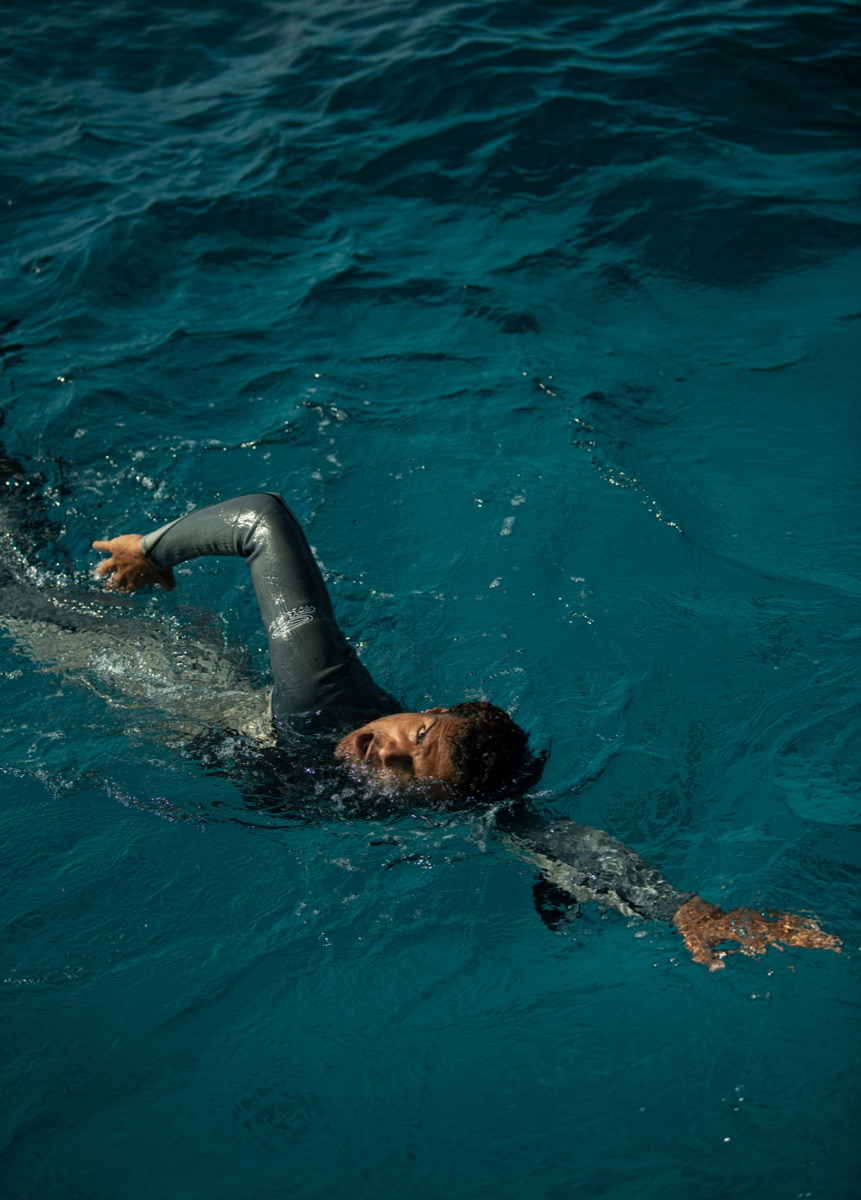
The short answer: breathe out gently while your face is in the water, rotate with the body, take a quick relaxed inhale and return the face before the head lifts. Practise at an easy pace where you can keep that rhythm.
Breathlessness is not always a carbon dioxide tolerance problem. Pace, body position, anxiety, cold water and medical conditions can all contribute.
Many fit runners and cyclists meet the same surprise in a pool. Their arms still feel capable, yet one length leaves them gasping at the wall.
The instinct is to take a bigger breath or work harder. In front crawl, that often makes the problem worse. A long, hurried breath lifts the head, drops the legs and interrupts the stroke. The extra drag then demands more effort.
Start With the Exhale
If you hold your breath under the water, the next breathing window has two jobs: empty the lungs and refill them. There is rarely enough time to do both without rushing.
Let the exhale begin after the face returns to the water. Keep it quiet and controlled rather than forcing every last bit of air out. When the mouth clears the surface, the remaining task is a short inhale.
Evidence note: reduced-frequency breathing and prolonged expiration are not harmless ways to prove toughness. In one swimming study, that combination produced marked oxygen desaturation after submaximal swimming. The finding supports normal, self-selected breathing rather than prolonged underwater breath restriction.
A Simple Pool Progression
- At the wall: put your face in and release a comfortable stream of bubbles. Stand before you feel urgent.
- Easy push and glide: exhale into the water, stand, reset and repeat. Keep the neck relaxed.
- Short front crawl repeats: swim 25 metres easily, rest until breathing is calm and repeat with the same rhythm.
- Add distance only when form stays quiet: if the inhale becomes a gasp or the head lifts, shorten the repeat or slow down.
Use the breathing pattern that lets you swim well. Bilateral breathing can be a useful skill, but breathing every three strokes is not a test you have to pass. During harder work or a race, many athletes need to breathe every two strokes.
What CO2 Tolerance Does and Does Not Mean
Rising carbon dioxide contributes to the urge to breathe during a breath hold. That does not mean every swimmer who feels breathless has poor CO2 tolerance, or that repeated breath holds are the answer.
For most developing triathletes, the useful target is coordination: a steady exhale, an unhurried body rotation, a small inhale and a pace they can sustain. This is breathing skill under movement, not a contest to stay underwater.
Never practise prolonged breath holding alone. Do not use hyperventilation before underwater swimming. In open water, build confidence with supervision, appropriate safety cover and a route that allows an easy exit.
When the Problem Is Not Technique
Stop and seek medical assessment if breathlessness is new, severe or accompanied by chest pain, faintness, wheezing, blue lips or a feeling that you cannot recover normally. Asthma, infection, heart problems and other conditions cannot be diagnosed from a stroke pattern.
Cold water can also trigger a powerful gasp and rapid breathing response. If open water produces panic that the pool does not, treat cold acclimatisation and water safety as separate skills. Do not assume a longer exhale will solve them.
A Better Session for Tomorrow
Warm up easily. Then swim eight relaxed 25 metre repeats with enough rest to restore calm breathing. Keep one cue only: exhale while the face is down. If that becomes consistent, repeat the set with a focus on rotating rather than lifting to inhale.
Finish before fatigue destroys the skill. A good breathing session is one you can reproduce, not one you survive.
The Bottom Line
Do not chase a bigger inhale. Give yourself time for it by breathing out in the water, keeping the head connected to the body rotation and slowing the pace until the rhythm holds.
Use breath restriction cautiously and never alone. If breathlessness feels abnormal or carries warning symptoms, leave the technique experiment and get medical advice.