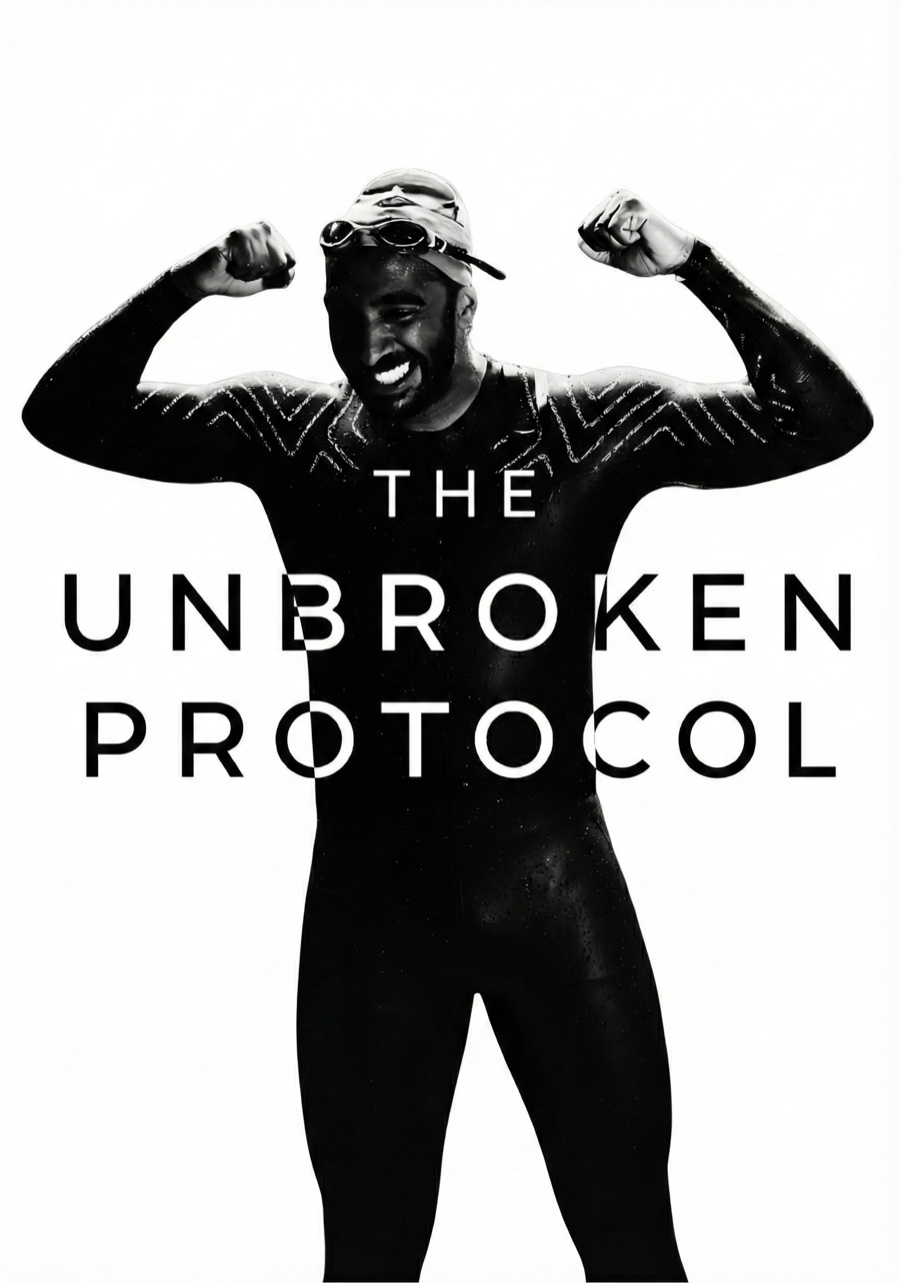
Ten days. No speaking, no reading, no writing, no phone, no eye contact. Up at four, sitting by four thirty, roughly ten hours a day on a cushion. No exercise, which was the part I was most worried about and turned out to be the part I minded least.
I went in treating it as an endurance event. I had done hard things before. I assumed I would be good at this the way I am good at other uncomfortable things, which is by gritting my teeth and outlasting them.
That approach lasted until roughly Wednesday.
I had spent years believing I was disciplined. I was mostly just busy.
The First Three Days Are Only Breathing
You do not start with anything mystical. You start with anapana, which is watching the breath at the entrance of the nostrils. Where it touches. Whether it is warm going out and cool coming in. That is the whole instruction, for three days.
It sounds like nothing. It is brutally difficult, and the difficulty is the information.
Within about forty seconds my attention was gone. Not wandering, gone, off composing a message to somebody about something that did not matter, and I would surface two or three minutes later with no memory of having left. Then again. Then again. Hundreds of times a day.
What that showed me, with a clarity I could not argue with, was that I did not have voluntary control of my own attention. I had been operating for years on the assumption that I was focused. What I actually was, was stimulated. Remove the stimulus and there was nothing steering.
Day Four
On the fourth day the practice changes. You stop watching the breath and start moving attention through the body, part by part, noticing sensation without reacting to it. Itching, aching, pressure, nothing at all. You do not scratch. You do not shift. You observe and move on.
Somewhere in that, sitting completely still in a hall full of strangers, I started crying and I could not have told you what about.
There was no memory attached. No story, nothing I could have described to another person. Just a wave of something old moving through the chest and out, entirely without my permission and entirely without explanation.
I have since read a good deal about why that happens, and I could give you a reasonable account involving a nervous system finally dropping its guard, and material held in the body for a long time surfacing once there is no distraction available to keep it down. That account is probably true. It also does very little to convey what it is like when it happens to you at nine in the morning on a Wednesday, sober, with nothing to blame it on.
What This Has To Do With Training
Everything, and it took me a while to see it.
I had been an athlete who could not rest. I could train through almost anything. What I could not do was sit in a room and be still, and I had organised my entire life so that I would never have to find that out. Training was the most respectable method I had found for staying ahead of myself, and because it is respectable, nobody ever questions it. Nobody pulls you aside for doing another session.
When I took the training away for ten days, what was underneath was not calm. It was a nervous system running at a level I had mistaken for normal, because I had never once turned the noise off long enough to hear it.
That is what I now watch for in the athletes I coach. Not whether they can train hard. Almost all of them can. Whether they can stop, and what happens to them when they do.
What I Actually Took Home
Not enlightenment. I want to be careful, because there is a version of this essay that overclaims and I have read too many of them.
Three things. The first is that attention is trainable, and that ten minutes a day of watching the breath does more for my ability to hold a hard effort than any mental toughness exercise I have tried. Focus under discomfort turns out to be the same skill in both places.
The second is that sensation and reaction are separable. On the cushion you learn, in the most boring way imaginable, that a strong sensation does not oblige you to move. That transfers directly to the fourth hour of a race, and it is the single most practically useful thing I brought back.
The third is less comfortable. Some of what surfaced in that hall was not going to be resolved by sitting on a cushion, and it was not going to be resolved by training either. It needed a professional, and I went and found one. I say that plainly because I am a coach and not a therapist, and the line between those two jobs matters considerably more than my ego does.
Would I Send You?
Not everyone, and not at any time. It is not a wellness break. If you are in the middle of something acute it is the wrong moment, and a silent hall with nothing to distract you can be a very hard place to be.
But if you are an athlete who cannot sit still, who fills every gap, who is training partly to outrun something you have not looked at, then I would say this. You can find that out in ten days, or you can find it out over the next fifteen years in a series of injuries and burnouts that never quite make sense to you.
You do not need ten days to begin. Sit for ten minutes tomorrow and watch the breath at your nostrils. If your attention holds for a full minute, you are already doing better than I was.