No. And the more interesting question is why so many people believe otherwise, and what that belief costs them.
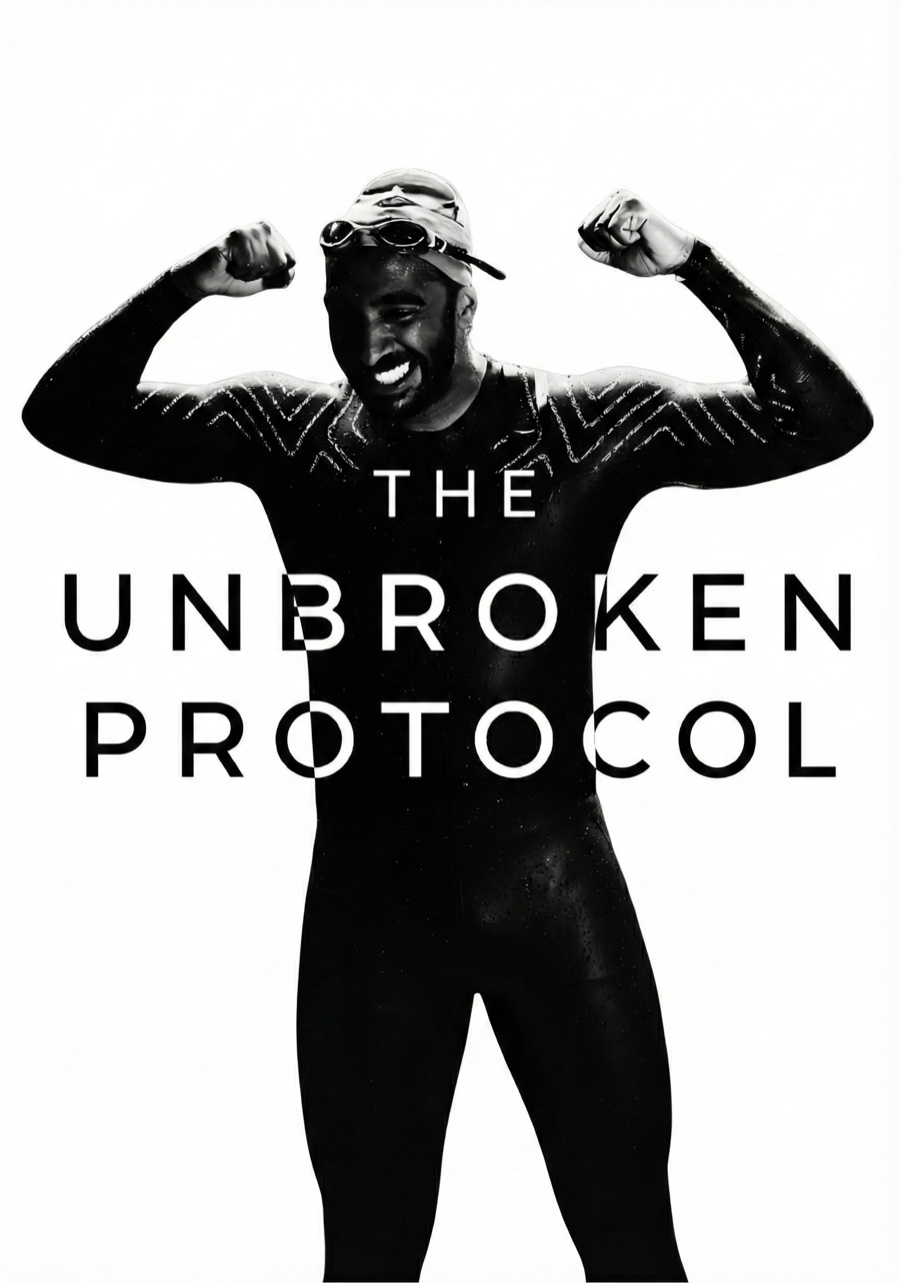
People finish full-distance Ironman races at every size. A man finished one at thirty-eight with a BMI of twenty-eight and a body fat percentage of twenty-seven, and posted about it precisely because he had spent years being told that body was the wrong one for the job. It was not. It went the whole way.
Where the Belief Comes From
From looking at professionals, who are outliers selected for a narrow set of physical characteristics, and mistaking the description for the requirement.
And from a genuine physical fact that gets over-applied. Lighter athletes do run faster, all else being equal. That is true. It is also true that "all else being equal" is doing enormous work in that sentence, because the thing being traded away in pursuit of leanness is almost never nothing.
What Actually Happens When Athletes Chase Race Weight
Here is the sequence I have watched more times than I can count.
An athlete decides to lose weight during a training block. They reduce intake while increasing load. For four to six weeks it appears to be working. Weight drops, sessions still feel fine, they are pleased.
Then, somewhere in week six or eight, several things happen at once. Sleep becomes shallow and broken. Resting heart rate rises. A niggle appears in an achilles or a shin and does not resolve the way niggles used to. Mood drops. Sessions that used to be routine feel disproportionately hard. Interest in training, and often in everything else, quietly disappears.
They interpret this as overtraining and reduce volume, which does not fix it, because it was never a volume problem.
Low Energy Availability
What has happened is that they dropped below the energy their body needs to run its basic maintenance once training is paid for.
Your body funds training first, because it has to. What gets cut is everything discretionary, and the discretionary list is longer and more important than most athletes realise. Bone remodelling. Hormone production. Immune function. Tissue repair. Thyroid activity.
This has a name, Relative Energy Deficiency in Sport, and it affects men and women. It does not require an eating disorder or extreme restriction. A moderate deficit maintained alongside a heavy training load is enough.
The visible symptoms are exactly the ones above, and because they look like overtraining, athletes usually respond by training less and eating less, which is precisely backwards.
The Trade You Are Actually Making
Suppose you lose three kilograms during a build. On the marathon, three kilograms is worth perhaps four to six minutes.
Now suppose that in getting there you compromised recovery for twelve weeks, lost two weeks to a tendon problem, and arrived at the start line under-fuelled with poor glycogen storage. That costs you far more than six minutes, and it can cost you the race entirely.
The trade only makes sense for athletes who are already lean, already recovering well, and competing for placings. For everybody else it is a bad deal made for aesthetic reasons that have been dressed up as performance ones.
What I Ask Athletes to Do Instead
- Do not diet during a build. Eat to support the training. If composition changes, and it usually does, let it be a consequence rather than a project.
- Fuel the session, properly. Carbohydrate before and during anything over ninety minutes. Athletes who train fasted to "burn fat" are mostly just training worse and recovering less.
- Eat within an hour of finishing. Protein and carbohydrate. This single habit changes more about how people feel in month four than any dietary strategy.
- If you want to change composition, do it in the off season. A modest deficit when training load is low is safe and effective. The same deficit in peak build is not.
What Actually Makes You Faster
In rough order: consistency across months, aerobic volume, race-specific fuelling practice, pacing discipline, and durable tissue that lets you keep training.
Body composition is somewhere below all of those, and it is the only one that people obsess over, largely because it is the one you can see.
The Bottom Line
You do not need to be skinny. You need to be fuelled, consistent and durable.
The leanest version of you is rarely the fastest version of you, and it is almost never the healthiest one. Feed the work. The body sorts itself out, and the race does not care either way.